In the modern economy, the voice of your business is quite literally the voice of your agents. Every customer interaction, every problem resolved, every sale closed—it all flows through a single, critical piece of technology: the Call Center Headset.
The global call center headset market is projected to reach $1.72 billion in 2026, expanding at a compound annual growth rate of 5.1% through 2035 . This growth is not merely statistical noise. It reflects a fundamental shift in how enterprises view customer communication. Headsets are no longer peripheral accessories; they are strategic assets that directly impact customer satisfaction, agent productivity, and operational efficiency.
Within this expanding market, one device has emerged as the preferred choice for discerning Pakistani organizations: the EPIC 512 headset. Building on the legendary durability of the EPIC 500 series, the EPIC 512 introduces refinements that address the specific needs of Pakistani call centers—from the megacity density of Karachi to the rapidly expanding BPO corridors of Multan.
This guest post is your definitive 2026 guide to understanding why Call Center Headsets matter more than ever, what makes the EPIC 512 headset the benchmark for enterprise audio, and how the market for Call Center Headsets in Multan is evolving as the city emerges as Pakistan’s newest BPO powerhouse.
And because world-class hardware requires world-class partnership, we will demonstrate why TheNextGenTechnologies—accessible at thenextgentechnologies.com—has earned its reputation as a top company in Pakistan’s professional audio landscape, delivering authenticated, warranty-covered solutions to organizations across the country.
Call Center Headsets: The Strategic Imperative
Before examining specific devices, we must understand why Call Center Headsets have become a strategic procurement category rather than an afterthought.
The Market Trajectory
The numbers tell a compelling story. The global call center headset market is projected to grow from $1.72 billion in 2026 to $2.69 billion by 2035 . This 5.1% CAGR reflects several structural shifts in how businesses operate and communicate.
Asia-Pacific, including Pakistan, is expected to be the fastest-growing region for call center headsets . Countries like China and India are focusing on building infrastructure to support enterprises and improve their economic standing in the global market. Small and medium enterprises are being encouraged to adopt the latest technologies to enhance efficiency and revenue generation . Pakistan’s BPO sector is riding this wave.
The Hybrid Work Revolution
The most significant driver of headset demand is the permanent shift toward remote and hybrid work models. As companies around the world adjust to hybrid working environments and increased customer engagement, the need for reliable communication tools has become paramount .
This trend is particularly pronounced in Pakistan, where BPO operators have embraced distributed workforces to access talent beyond major metropolitan centers. Agents in Multan, Faisalabad, and Gujranwala now serve international clients from home offices—requiring headsets that deliver studio-grade audio without the acoustic treatment of professional facilities.
The Productivity Connection
Research confirms what experienced call center managers have always known: audio quality directly impacts agent performance. Headsets designed for professional use feature noise-canceling microphones, lightweight ergonomics for extended wear, and seamless connectivity to multiple devices . These features reduce fatigue, minimize errors, and enable agents to handle more calls with higher customer satisfaction scores.
Organizations investing in premium headsets consistently report lower turnover rates, reduced training costs, and improved first-call resolution metrics. The headset is not an expense; it is an investment in operational excellence.
Technology Trends Reshaping the Market
Several key trends are driving innovation in the call center headset category :
- Wireless Adoption: Wireless headsets using Bluetooth and DECT technology are gaining market share, offering agents mobility and flexibility. However, wired headsets maintain dominance in high-security BPO environments where signal interference and battery anxiety remain concerns.
- AI-Enhanced Audio: Artificial intelligence is enabling advanced noise cancellation, real-time transcription, and intelligent voice recognition. These features make communication clearer by removing background noise and making voices more accurate.
- Ergonomic and Sustainable Design: Manufacturers are placing greater emphasis on lightweight construction, breathable materials, and eco-friendly production methods. Comfort during 8-12 hour shifts is no longer optional.
- UC Platform Integration: Headsets must now work seamlessly with unified communications platforms like Zoom, Teams, and 3CX. Certification and compatibility have become purchasing prerequisites.
EPIC 512 Headset: The Evolution of Excellence
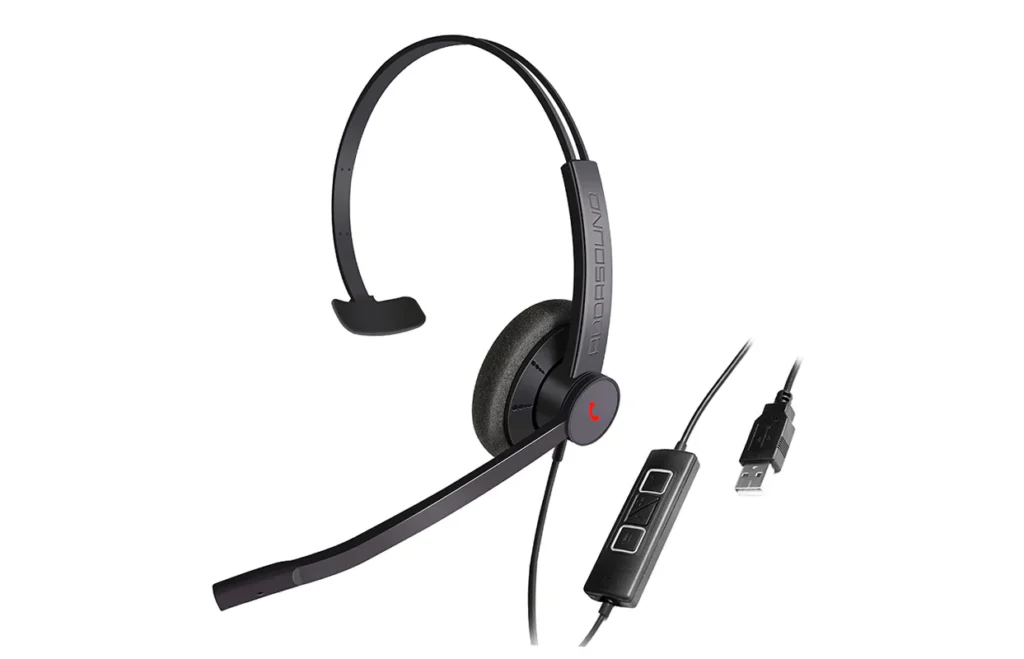
The EPIC 512 headset represents the next generation of EPIC’s legendary enterprise audio lineup. Building on the durability and audio quality that made the EPIC 500 series the preferred choice for Pakistani BPOs, the EPIC 512 introduces refinements that address the evolving needs of modern call centers.
Technical Architecture
While specific technical documentation for the EPIC 512 is detailed in manufacturer specifications, the device inherits and enhances the core engineering principles that have defined EPIC’s success:
Form Factor: Mono Professional Design
The EPIC 512 maintains the mono (single-ear) configuration that experienced call center managers prefer. Unlike dual-ear headsets that completely isolate agents from their environment, mono design allows one ear to remain free, maintaining ambient awareness and preventing the sensory isolation that causes fatigue during long shifts. Agents can hear their surroundings, supervisors can communicate without interrupting calls, and the noise-canceling microphone ensures customers hear none of this ambient sound.
Audio Processing: HD Voice Optimization
The EPIC 512 is engineered specifically for voice communication, not music playback. Its driver is tuned for the 300Hz–3.4kHz voice band, delivering speech clarity that consumer headsets with exaggerated bass and treble cannot match. Consonants are articulated. Sibilance is suppressed. Technical terminology is transmitted accurately—essential for knowledge process outsourcing (KPO) applications.
Microphone Technology: Advanced Noise Cancellation
Building on EPIC’s field-tested microphone architecture, the EPIC 512 incorporates enhanced noise rejection that isolates the agent’s voice from ambient chaos. In open-plan environments where dozens of agents speak simultaneously, this directional rejection prevents “crosstalk”—the phenomenon where adjacent agents become audible through each other’s headsets.
Durability Engineering: The EPIC Legacy
EPIC headsets have earned their reputation in Pakistani BPOs through one specific advantage: cable survival. Standard call center headsets fail at the cable-entry point—the junction where copper meets connector. Strain, twisting, and desk-edge abrasion kill 80% of headsets within 6 months.
The EPIC 512 continues the EPIC tradition of Kevlar-reinforced, braided cabling with molded strain-relief connectors. Field data from Pakistani BPOs indicates EPIC headsets survive 18–24 months in high-intensity shift operations—triple the lifespan of generic alternatives.
Comfort Engineering
Weight distribution is critical for agents working 8-12 hour shifts. The EPIC 512’s self-adjusting stainless steel headband distributes pressure evenly, eliminating the “hot spots” that cause fatigue. Replaceable PU leather ear cushions resist sweat degradation and maintain passive noise isolation.
Connectivity Options
The EPIC 512 is available in configurations supporting:
- Dual 3.5mm connectivity for traditional desk phones
- USB connectivity for PC-based softphones and UC platforms
- Quick-disconnect cabling for agents who frequently move between workstations
Strategic Positioning
The EPIC 512 occupies the premium tier of EPIC’s wired mono headset lineup. It is designed for organizations that demand the absolute best in audio clarity, durability, and comfort—and recognize that these attributes directly impact customer experience and agent retention.
Ideal Deployment Scenarios:
- Large-scale BPO operations with 100+ seats
- Knowledge process outsourcing (KPO) requiring technical terminology accuracy
- Premium customer service centers where brand image matters
- Organizations with high agent retention targets
Call Center Headsets in Multan: The Southern Powerhouse Awakens
Multan’s emergence as a call center hub is one of the most significant developments in Pakistan’s BPO landscape. The city of saints is transforming into the city of seats, and understanding this transformation is essential for anyone tracking the market for Call Center Headsets in Multan.
Why Multan? Why Now?
Cost Arbitrage Advantage
Operational costs in Multan are approximately 30-35% lower than Karachi and 25-30% lower than Islamabad/Rawalpindi. Real estate acquisition and rental rates for office space in Multan’s developing commercial corridors—Bahawalpur Road, Vehari Road, and the new BPO Zone near Multan Industrial Estate—are significantly below metropolitan rates.
This cost advantage allows BPO operators to scale more rapidly, invest more heavily in training, and offer competitive pricing to international clients—all while maintaining healthy margins.
The Talent Pipeline
Multan is home to Bahauddin Zakariya University, NFC Institute of Engineering and Technology, and Women University Multan, producing thousands of English-proficient graduates annually. With limited large-scale industrial employment opportunities, the BPO sector has become a primary career pathway for educated youth.
This demographic advantage is critical. Young, educated, English-proficient workers are the lifeblood of any BPO operation, and Multan possesses this resource in abundance.
Infrastructure Improvement
The completion of M-4 motorway connectivity and the expansion of Multan International Airport have reduced the city’s historical isolation. International clients visiting Pakistan now routinely include Multan in their BPO site inspection itineraries. The city is no longer perceived as remote; it is increasingly seen as a strategic location with excellent connectivity.
Government Support
Punjab government initiatives promoting IT and BPO investment in secondary cities have extended tax incentives, subsidized utility rates, and streamlined NOC processes for call center operators establishing in Multan. These policies are deliberately designed to disperse economic activity beyond Lahore and create employment opportunities in underserved regions.
The Headset Challenge in Multan
Despite this explosive growth, Call Center Headsets in Multan face a severe authenticity crisis that mirrors—and in some ways exceeds—the challenges faced in larger cities.
Multan’s traditional electronics supply chain—concentrated in Hussain Agahi Market and Chowk Fawara—is dominated by generalist consumer electronics importers. These vendors excel at selling televisions, refrigerators, and mobile phones. They possess zero expertise in enterprise-grade communications equipment.
The consequences for Multan BPOs are severe:
- Counterfeit Penetration Exceeds 70%: Genuine Jabra, Plantronics, and Sennheiser units are virtually unavailable through local channels. Vendors display genuine samples but deliver counterfeit units from back-office inventory.
- No Technical Consultation: Vendors cannot advise on desk phone compatibility, USB adapter requirements, or UC platform certification. They sell boxes, not solutions.
- Warranty Is Fiction: “Shop warranties” vanish when the shopkeeper closes or shifts inventory. Organizations are left with failed equipment and no recourse.
- Spare Parts Unavailable: Replacement ear cushions, cables, and boom microphones cannot be sourced locally, rendering otherwise functional headsets unusable.
The Multan Solution
Forward-thinking Multan BPO operators have abandoned local procurement entirely. They now source EPIC 512 headsets and other enterprise-grade equipment directly from top companies like TheNextGenTechnologies, bypassing the compromised local supply chain entirely.
This direct procurement model delivers:
- Authenticated inventory with traceable serial numbers
- Pakistan-enforceable written warranties
- Technical consultation on deployment and integration
- Spare parts availability for ongoing maintenance
- Volume pricing for growing operations
The EPIC 512 Advantage: Why Pakistani BPOs Are Switching
The shift toward EPIC headsets across Pakistan’s most discerning call centers is not accidental. It reflects four distinct competitive advantages that the EPIC 512 embodies:
1. Total Cost of Ownership Dominance
The acquisition cost differential between EPIC and premium international brands is substantial—often 30-40% lower for comparable functionality. However, the true advantage is total cost of ownership. EPIC’s 18-24 month lifespan in high-intensity environments means organizations replace headsets one-third as often as they would with generic alternatives.
The math is straightforward: a generic headset at PKR 3,500 that fails in 6 months costs PKR 7,000 per year. An EPIC 512 at PKR 8,500 that lasts 24 months costs PKR 4,250 per year. The “cheaper” option is actually twice as expensive.
2. Cable Durability That Saves Operations
The single greatest operational expense in call center headset procurement is replacement frequency. Agents do not deliberately damage headsets; they simply use them intensively. Cables fray. Connectors fatigue. Strain relief fails.
EPIC’s Kevlar-reinforced, strain-relieved cabling directly addresses this failure mode. Organizations that switch to EPIC report dramatic reductions in replacement requests, agent downtime, and IT support burden.
3. Agent Comfort = Agent Retention
Headset fatigue is not a minor inconvenience; it is a retention risk. Agents who experience discomfort during shifts are more likely to seek excuses for call avoidance, more likely to request transfers, and more likely to leave entirely.
The EPIC 512’s lightweight construction, self-adjusting headband, and breathable ear cushions eliminate the pressure points that cause fatigue. Agents who are comfortable are agents who stay.
4. Voice-Optimized Audio Quality
Consumer headsets boost bass and treble to create “impressive” sound signatures. This is destructive for call center applications. Bass frequencies mask consonant clarity. Exaggerated treble emphasizes sibilance and hiss.
The EPIC 512 is tuned specifically for voice communication, delivering speech that cuts through background noise without artificial enhancement. Customers hear agents clearly. Agents understand customers accurately. Errors decrease. Satisfaction increases.
TheNextGenTechnologies: Your Partner in Professional Audio
In a fragmented market characterized by counterfeit inventory, evaporating warranties, and technical illiteracy among generalist vendors, the selection of a technology partner is as consequential as the selection of the technology itself.
TheNextGenTechnologies has earned its reputation as a top company in Pakistan’s professional communications sector through a decade of demonstrated performance. Our platform at thenextgentechnologies.com serves as a trusted destination for authenticated audio solutions.
Our Capability Framework:
1. Authorized Supply Chain Integrity
Every EPIC 512 headset we deliver is sourced through authorized distribution channels. Each unit carries:
- Traceable serial numbers verified with manufacturers
- Pakistan-enforceable written warranties
- Authentic packaging with complete documentation
- Current specifications and compatibility validation
We do not participate in the grey-market economy that compromises device authenticity and after-sales support.
2. Technical Consultation and System Integration
A headset is not merely “audio equipment.” It is an interface between your agent and your client. Our technical consultation services validate:
- Softphone compatibility (3CX, Avaya, Cisco Jabber, Zoom, Teams)
- Desk phone compatibility (Yealink, Grandstream, Polycom)
- USB adapter requirements for PC-based deployments
- Bulk cabling options for fixed workstation configurations
3. Multan-Specific Expertise
We understand the unique challenges facing Call Center Headsets in Multan. Our team works directly with Multan-based BPOs to bypass compromised local supply chains, delivering authenticated inventory directly to your facility with full technical support.
4. After-Sales Continuity
When a headset in Multan exhibits configuration anomalies, when a Karachi-based enterprise requires 50 additional units urgently, when a Lahore organization needs spare ear cushions—TheNextGenTechnologies responds. Our service commitment extends beyond the invoice date.
5. Enterprise Volume Economics
We structure pricing to reward growth and scale. Organizations deploying 50+, 100+, or 500+ units access volume pricing that unauthorized channels cannot match—because we compete on total cost of ownership, not margin on individual units.
Visit thenextgentechnologies.com to explore our comprehensive professional audio portfolio and initiate your enterprise communication transformation.
Conclusion: Clarity Is Not a Luxury—It Is a Competitive Weapon
The global call center headset market is expanding at 5.1% CAGR, driven by hybrid work permanence and rising expectations of audio quality . Pakistan’s BPO sector, competing with India, the Philippines, and Eastern Europe for international outsourced contracts, cannot afford to treat headsets as an afterthought.
Call Center Headsets are strategic assets that directly impact customer satisfaction, agent productivity, and operational efficiency. The organizations that invest in premium audio equipment consistently outperform those that treat headsets as commodities.
The EPIC 512 headset represents the evolution of EPIC’s legendary durability and audio quality. With enhanced noise cancellation, refined ergonomics, and the Kevlar-reinforced cabling that has made EPIC the preferred choice for Pakistani BPOs, it is the rational choice for organizations that understand the true cost of equipment failure.
Call Center Headsets in Multan face unique challenges—a compromised local supply chain, limited technical expertise among generalist vendors, and the rapid growth of the city’s BPO sector. Yet these challenges are surmountable through partnership with distributors who prioritize authenticity and after-sales support over short-term margins.
Yet technology, no matter how exceptional, is only as valuable as the supply chain that delivers it and the expertise that deploys it. TheNextGenTechnologies is that supply chain and that expertise. As a top company in Pakistan’s professional communications sector, we deliver the hardware, the integration knowledge, and the after-sales continuity that organizations require to execute successful headset deployments.
Visit thenextgentechnologies.com. Verify our inventory. Authenticate your supply chain. And ensure that your customers hear your agents—clearly, professionally, without static, without interruption.
In customer service, every call is an audition. Do not let substandard equipment—or substandard suppliers—fail your performance.
Frequently Asked Questions (FAQs)
1. What is the price range for EPIC 512 headsets in Pakistan?
As a premium enterprise-grade model, the EPIC 512 is priced higher than entry-level EPIC 301 units. For specific pricing on the EPIC 512 and volume discounts for enterprise deployments, please contact TheNextGenTechnologies directly at thenextgentechnologies.com for current pricing and availability.
2. How does the EPIC 512 differ from the EPIC 301?
The EPIC 512 represents the premium tier of EPIC’s wired mono headset lineup, featuring enhanced noise cancellation technology, refined ergonomics, and advanced audio processing compared to the EPIC 301. Both devices share EPIC’s legendary Kevlar-reinforced cable durability and voice-optimized frequency response, but the EPIC 512 is designed for organizations that demand the absolute best in audio clarity and comfort for their agents.
3. Where can I buy genuine call center headsets in Multan?
Local Multan electronics markets (Hussain Agahi, Chowk Fawara) cannot reliably source genuine enterprise-grade headsets. Counterfeit penetration exceeds 70% for international brands. The recommended procurement channel is direct from top companies like TheNextGenTechnologies at thenextgentechnologies.com, who deliver verified, warranty-covered EPIC headsets directly to Multan BPOs with full technical consultation.
4. Why are wired mono headsets still recommended over wireless for most agents?
While wireless adoption is growing globally, wired mono headsets remain optimal for 95% of Pakistani call center agent positions. Wired headsets offer zero battery anxiety (no mid-shift failures), guaranteed connection stability (no signal interference in dense deployments), lighter weight (no battery pack), and significantly lower cost than premium wireless alternatives. Wireless is best reserved for team leads, managers, and executives requiring floor mobility.
5. What is the typical lifespan of EPIC headsets in high-intensity BPO environments?
Field data from Pakistani BPOs indicates that EPIC headsets with Kevlar-reinforced cabling survive 18–24 months in high-intensity shift operations—approximately three times the lifespan of generic alternatives. This durability directly translates into lower total cost of ownership and reduced operational disruption from equipment failures.