Frozen Storage in Riyadh: A Food Business Guide 2026
Frozen storage in Riyadh has become a make-or-break factor for restaurants, caterers, and food importers across the capital. When demand spikes around Ramadan, Eid, and the wedding season, the businesses with reliable cold capacity win, and those without it scramble and lose sales. This 2026 guide is written specifically for food operators who need frozen space to work flawlessly under pressure.
Riyadh’s food scene is expanding fast, and consumer expectations for quality keep rising. Getting frozen storage in Riyadh right is one of the highest-leverage decisions a food business can make this year.
Why Frozen Storage in Riyadh Drives Food Businesses
Frozen storage lets you buy in bulk, lock in prices, and smooth out supply gaps. For a restaurant group, that means importing seafood or meat when the price is right and holding it safely until service. The freezer becomes a financial tool, not just a cold room.
Riyadh’s climate makes this even more critical. With outdoor heat soaring in summer, any deep-freeze facility must hold a rock-steady temperature and recover instantly after doors open. For food safety fundamentals behind these rules, the guidance published by the World Health Organization remains a trusted global reference.
How Seasonal Peaks Change Your Freezer Needs
Food demand in Saudi Arabia is deeply seasonal. Planning your frozen capacity around these peaks prevents both stockouts and wasteful over-renting during quiet months.
- Ramadan drives a massive surge in prepared foods, dates, and beverages.
- Eid celebrations spike demand for meat, poultry, and desserts.
- Wedding season fills caterers’ freezers with bulk ingredients.
- Summer travel shifts demand toward frozen convenience products.
Frozen vs Ambient: Matching Ingredients to the Right Zone
A common and expensive error is dumping everything into one temperature zone. Frozen space is costly to run, so reserving it for goods that truly need deep-freeze keeps your bill sensible while protecting quality.
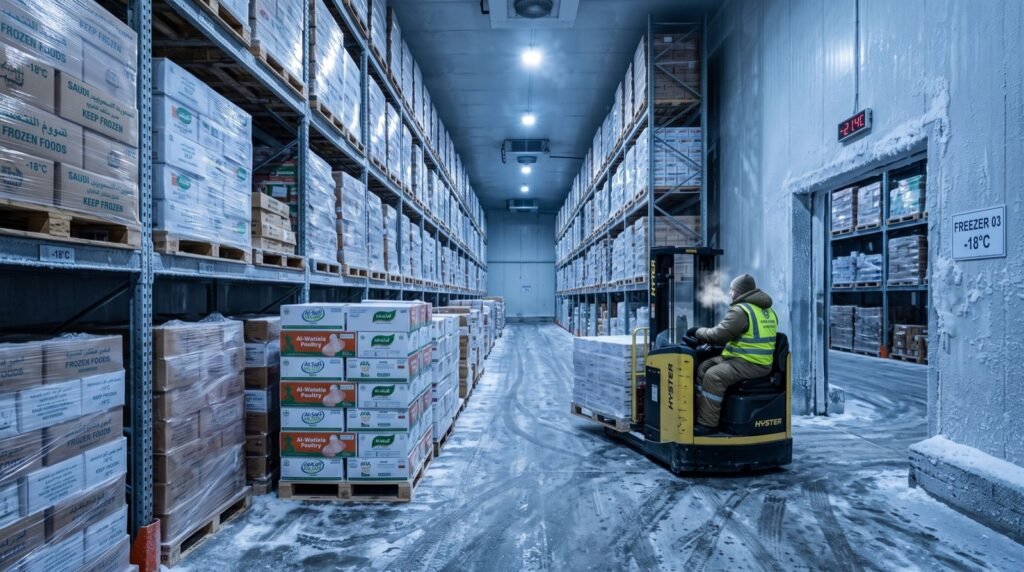
For long-hold ingredients like meat, seafood, and frozen bakery, professional Frozen Storage in Riyadh is the correct home. For shelf-stable dry goods, oils, and packaged items that only need a steady moderate climate, dedicated Ambient Storage in Dammam is far more economical. The table below shows how to split a typical kitchen inventory.
| Ingredient Group | Recommended Zone | Why |
|---|---|---|
| Meat, poultry, seafood | Frozen | Long hold, high spoilage risk |
| Bakery dough, desserts | Frozen | Preserves texture and shelf life |
| Rice, flour, spices | Ambient | Stable at moderate temperature |
| Canned and packaged goods | Ambient | No refrigeration needed |
Splitting inventory this way often cuts total storage cost by a noticeable margin, because you stop paying freezer rates for goods that never needed them.
What a Reliable Frozen Facility Looks Like
Not all freezers are equal. The gap between a professional facility and a cheap one shows up the first time the power flickers or the temperature logger is questioned during an inspection.
The Questions Smart Food Operators Ask First
- Does the facility hold a stable deep-freeze temperature with continuous logging?
- Are backup generators tested regularly and able to carry full load?
- Is there separation between raw proteins and ready-to-eat goods?
- Can they provide exportable temperature records for audits?
- How quickly does the freezer recover after loading or dock activity?
Here is an original tip few brochures mention: ask about “door discipline.” Facilities that limit how long freezer doors stay open, using air curtains, fast doors, and staged loading, protect your product far better than those that leave doors gaping during a busy pick. It is a small habit that quietly saves quality.
Building a Cold Chain That Survives Ramadan
The busiest weeks of the year are precisely when weak systems fail. Plan capacity months ahead, because the best facilities fill their seasonal slots early. Waiting until the last week of Sha’ban is a recipe for panic.
Coordinate deliveries during cooler hours, insist on insulated transport, and keep a documented handover at every step. Partnering with an experienced local team for logistics and staff training turns a fragile setup into a dependable one.
Track your usage data after each peak. In 2026, the operators who review what they actually stored, wasted, and ran short on are the ones who negotiate smarter contracts next year.
Cutting Food Waste With Better Freezer Discipline
Food waste is a silent profit killer, and much of it starts inside the freezer. Products buried at the back, unlabelled boxes, and forgotten batches all end up in the bin. A disciplined system turns your frozen space from a graveyard into a rotating, well-managed asset.
Adopt a strict first-in, first-out rotation so the oldest stock always leaves first. Label every batch with a clear receiving date, and place newer deliveries behind older ones. This single habit dramatically reduces the amount of product that expires unnoticed at the back of a shelf.
Portioning before freezing is another quiet win. When you freeze meat or prepared items in service-sized portions rather than one huge block, your kitchen thaws only what it needs and refreezing risks disappear. Smaller portions also freeze and recover faster, protecting texture and taste.
Finally, run a monthly freezer audit. Walk the shelves, note what is aging, and build menu specials around ingredients that need to move. This turns potential waste into revenue and keeps your storage costs working for you rather than against you throughout the busy 2026 calendar.
Frequently Asked Questions
Why do food businesses need frozen storage in Riyadh?
Frozen storage in Riyadh lets food businesses buy in bulk, lock in prices, and hold seafood, meat, and bakery goods safely until service. It smooths out supply gaps and gives operators the capacity to handle demand spikes during Ramadan, Eid, and wedding season without spoilage.
Which ingredients need frozen versus ambient storage?
Meat, poultry, seafood, and frozen bakery belong in deep-freeze, while stable dry goods like rice, flour, and canned items suit ambient storage. Splitting inventory by zone protects quality and usually cuts total storage cost.
How early should I book frozen storage before Ramadan?
Book several months ahead. The best facilities fill their seasonal slots early, so reserving capacity well before the season protects you from last-minute shortages and premium rush pricing.
What backup systems should a frozen facility have?
Look for automatic backup generators tested under full load, continuous temperature logging, and monitored alarms. Given Riyadh’s summer heat, these safeguards are essential to keep frozen goods within safe limits during any power interruption.
Final Thoughts
Frozen storage in Riyadh is far more than a cold box, it is a strategic asset that shapes your buying power, your food safety record, and your ability to perform during the busiest weeks of the year. Choose a facility with proven reliability, split your inventory intelligently, and plan around the seasons.
Apply this 2026 guide, ask the hard questions before signing, and treat your cold chain as one continuous system from supplier to plate. Do that, and your freezer becomes a genuine engine for growth.