
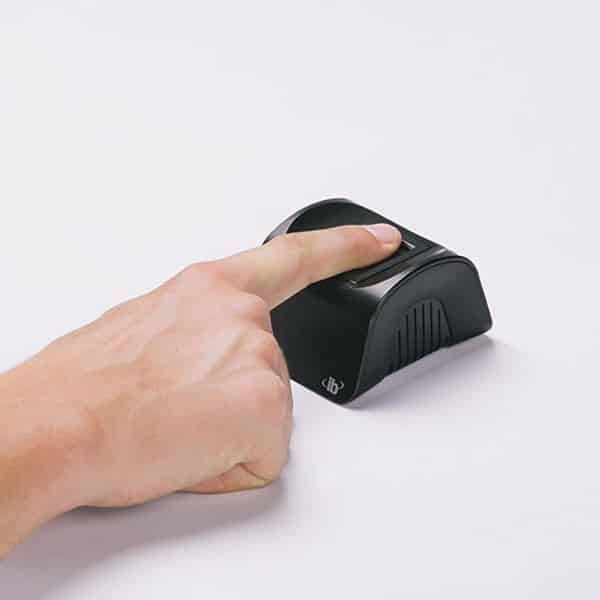
In an era where digital identity is the new currency, the question is no longer whether organizations should adopt biometric authentication, but how quickly they can implement it without compromising security or operational efficiency.
Pakistan stands at the forefront of this biometric revolution. From the 1,700+ branches of HBL managing 70,000 daily fingerprint clock-ins to NADRA’s nation-wide identity infrastructure, biometric technology has moved from novelty to necessity . The Pakistan enterprise biometrics market is poised for significant growth through 2031, driven by government initiatives, rising security concerns, and the undeniable convenience of finger-based authentication .
This guest post is your comprehensive 2026 guide to understanding the ecosystem of Biometric Finger Print Scanner and Biometric Finger Print Device technologies. We will explore the underlying technologies, examine real-world enterprise deployments, and provide actionable intelligence for organizations seeking to implement or upgrade their biometric infrastructure.
And because world-class technology requires world-class partnership, we will demonstrate why TheNextGenTechnologies—accessible at thenextgentechnologies.com—has earned its reputation as a top company in Pakistan’s biometric security landscape, delivering authenticated, warranty-covered solutions tailored to enterprise requirements.
Biometric Finger Print Scanner: The Technology Behind the Touch
The Biometric Finger Print Scanner is not a monolithic device. Beneath the familiar touch surface lies a sophisticated ecosystem of sensor technologies, each with distinct advantages and ideal applications.
The Four Pillars of Fingerprint Scanning Technology
Understanding the technology options is the first step in selecting the right device for your organization.
Optical Scanners: The Workhorse
Optical scanners are the most widely adopted fingerprint technology, using light-based imaging to capture a 2D picture of the fingerprint . These devices function much like a miniature camera—light illuminates the finger, and the sensor captures the reflected image of ridges and valleys.
Advantages:
- Cost-effective and affordable to produce
- Easy to integrate into existing access systems
- Simple user interface with minimal learning curve
- Widely available across Pakistani markets
Limitations:
- Vulnerable to spoofing using fake fingerprints (gelatin or silicone replicas)
- Performance degrades with dirty, wet, or worn fingerprints
- Lower accuracy compared to advanced technologies
Best for: Office time attendance, basic access control, and cost-sensitive deployments where security requirements are moderate.
Capacitive Scanners: The Enterprise Standard
Capacitive sensors, also known as Capsense technology, use electrical conductivity to map fingerprint ridges and valleys by measuring differences in capacitance . When a finger touches the sensor, ridges create higher capacitance while valleys create lower capacitance, creating a detailed electrical map of the fingerprint.
Advantages:
- Higher accuracy and resolution than optical scanners
- More resistant to spoofing attempts
- Compact and durable design ideal for enterprise environments
- Performs well across various environmental conditions
Limitations:
- More expensive to manufacture than optical sensors
- May struggle with very dry or damaged skin
- Requires direct contact with the sensor surface
Best for: Corporate access control, banking applications, and environments requiring robust security without the premium cost of ultrasonic technology.
Ultrasonic Scanners: The High-Security Choice
Ultrasonic scanners represent the cutting edge of fingerprint technology, utilizing high-frequency sound waves to create a detailed 3D map of the fingerprint, including sub-surface features like pore structure and ridge depth .
Advantages:
- Exceptional accuracy and anti-spoofing capabilities
- Works effectively with wet, dry, or oily fingers
- Creates a live tissue map, reducing fake finger risks
- Can penetrate screen layers for under-display applications
Limitations:
- High manufacturing and implementation costs
- Slower processing speed compared to capacitive sensors
- Higher power consumption
Best for: High-security government facilities, financial institutions handling sensitive transactions, and defense applications where spoofing prevention is paramount.
Thermal Scanners: The Multi-Factor Component
Thermal scanners detect temperature variations between fingerprint ridges and valleys when a finger makes contact with the sensor surface . These are rarely deployed as standalone technology but excel in multi-modal systems.
Advantages:
- Detects live tissue, enhancing anti-spoofing measures
- Quick response time during authentication
Limitations:
- Requires finger movement or swipe for full scan
- Sensitive to ambient temperature changes
- Limited market availability
Best for: Multi-factor authentication systems and specialized biometric verification requiring maximum security assurance.
The Resolution Factor: FAP Standards
For organizations requiring compliance with international standards, understanding Fingerprint Acquisition Profile (FAP) ratings is essential. FAP 20 certified devices, for example, guarantee a minimum resolution of 500 dpi, ensuring interoperability with national biometric databases and law enforcement systems . This certification is particularly critical for government contracts, law enforcement applications, and organizations integrating with NADRA’s infrastructure.
Biometric Finger Print Device: From Standalone Units to Enterprise Ecosystems
A Biometric Finger Print Device is rarely an isolated tool. In modern enterprises, these devices function as nodes within an integrated ecosystem of access control, time attendance, and identity management.
The ZKTeco F18: The Standalone Access Control Benchmark
The ZKTeco F18 represents the gold standard for standalone biometric access control in Pakistan. Priced at Rs. 25,200 as of January 2026, this device delivers enterprise-grade performance in a sleek, space-efficient form factor .
Technical Specifications:
- Display: TFT LCD color screen displaying fingerprint image for optimal user guidance
- Fingerprint Capacity: 3,000 templates
- Transaction Capacity: 30,000 transactions
- Communication: TCP/IP, RS485, USB-host
- Access Control Interface: Supports 3rd party electric locks, door sensors, exit buttons, alarms, and doorbells
- Optional Functions: ID Card, Mifare Card integration
- Operating Temperature: 0°C to 45°C
The F18’s TFT color screen is particularly valuable—it displays the fingerprint image during capture, guiding users to proper finger placement and significantly increasing recognition rates . This visual feedback loop reduces frustration and improves first-attempt success rates in high-traffic environments.
The POLLO Series: Cost-Effective Excellence
For organizations seeking reliable fingerprint attendance without premium pricing, POLLO has emerged as a trusted brand in Pakistan.
The POLLO PLB-2000 Bio Slim Fingerprint Time Attendance System delivers accurate, fast biometric recognition at an accessible price point of Rs. 14,300 . Its slim, modern design fits seamlessly into professional environments while providing:
- Reduced manual attendance errors and time theft
- User-friendly interface for easy operation
- Reliable performance with low power consumption
- Suitable for offices, schools, factories, and retail
For organizations requiring dual authentication, the POLLO PLF-S1000 Face Slim combines face and fingerprint recognition at Rs. 32,300 . This multi-modal approach offers flexibility during peak hours—employees can choose their preferred authentication method, reducing queues while maintaining security.
The Enterprise Integration Imperative
A fingerprint device is only as valuable as its integration with broader enterprise systems. The HBL deployment, spanning 1,700 branches with 70,000 daily fingerprint clock-ins, demonstrates the power of centralized biometric management .
Key integration requirements for enterprise deployments:
- Real-time synchronization: Manual data downloads are unacceptable at scale. Devices must support push technology for instantaneous transmission to central servers.
- HRMS integration: Biometric data should flow directly into payroll systems, automating salary calculations and eliminating manual reconciliation.
- Multi-zone architecture: For nation-wide deployments, dividing networks into zones with dedicated servers ensures performance and redundancy.
- Blacklist management: Integration with HR systems enables automatic flagging of terminated employees, preventing rehiring of restricted individuals .
The Pakistani Enterprise Context: Drivers and Challenges
Understanding the Biometric Finger Print Scanner and Biometric Finger Print Device market in Pakistan requires examining the unique forces shaping adoption.
Market Drivers
Government Initiatives: NADRA’s biometric national identification cards have created a population comfortable with fingerprint authentication. The government’s mandate for biometric verification in financial transactions has further accelerated adoption .
Banking Sector Demand: With over 37 million customers and 1,700 branches, HBL’s centralized biometric system exemplifies the banking sector’s commitment to biometric security . Other banks are following suit, driving demand for reliable, scalable fingerprint devices.
Security Concerns: Rising awareness of identity theft, fraud, and data breaches has pushed organizations toward biometric authentication as a more secure alternative to passwords and access cards .
Workforce Management: The ability to eliminate time theft, buddy punching, and manual attendance errors provides immediate return on investment for organizations deploying biometric time attendance systems .
Market Challenges
Data Privacy Concerns: The collection and storage of biometric data raises legitimate privacy questions. Organizations must implement robust encryption and transparent privacy policies to maintain user trust .
Implementation Costs: While long-term savings are substantial, the initial investment in biometric infrastructure can deter smaller organizations .
Counterfeit and Grey Market: The Pakistani market faces significant challenges from unauthorized channels selling refurbished, counterfeit, or grey-market devices with no warranty or technical support. Purchasing through authorized distributors is essential for ensuring device authenticity and after-sales service.
Standardization Issues: Lack of interoperability between different biometric solutions can create integration challenges for organizations with mixed vendor environments .
The Selection Framework: Choosing Your Biometric Solution
Selecting the right Biometric Finger Print Scanner or Biometric Finger Print Device requires matching technology to application.
Deployment Scenario A: Small Office / Retail (Under 50 employees)
Requirements:
- Cost-effective entry-level solution
- Simple installation and operation
- Basic time attendance functionality
Recommended Solution: POLLO PLB-2000 (Rs. 14,300)
The PLB-2000 delivers accurate fingerprint recognition, user-friendly interface, and reliable performance at an accessible price point . For organizations with basic attendance tracking needs, this device offers exceptional value.
Deployment Scenario B: Mid-Size Enterprise (50-500 employees)
Requirements:
- Higher fingerprint capacity
- Network connectivity for centralized management
- Integration with payroll software
Recommended Solution: ZKTeco F18 (Rs. 25,200)
With 3,000 fingerprint templates and 30,000 transaction capacity, the F18 scales comfortably for growing organizations. TCP/IP connectivity enables centralized management, while the TFT color screen improves user experience .
Deployment Scenario C: Large Enterprise / Multi-Site Operation (500+ employees)
Requirements:
- High-volume transaction processing
- Real-time synchronization across locations
- Enterprise-grade reliability
- Advanced access control features
Recommended Solution: Multi-zone ZKTeco deployment with centralized server architecture
As demonstrated by HBL’s 1,700-branch deployment, large organizations require zoned architectures with high-spec servers, SQL database integration, and real-time synchronization . This level of deployment demands professional consultation and custom configuration.
Deployment Scenario D: High-Security / Government Applications
Requirements:
- FBI-certified image quality
- Liveness detection / anti-spoofing
- Compliance with international standards
Recommended Solution: FAP 20 certified devices with multi-modal options
For applications requiring maximum security, FAP 20 compliance ensures interoperability with national and international biometric databases . Multi-modal systems combining fingerprint with facial recognition or other modalities provide additional security layers.
TheNextGenTechnologies: Your Partner in Biometric Excellence
In a market characterized by fragmented vendors, grey-market imports, and evaporating warranties, the selection of a technology partner is as consequential as the selection of the technology itself.
TheNextGenTechnologies has earned its reputation as a top company in Pakistan’s biometric security landscape through a decade of demonstrated performance. Our platform at thenextgentechnologies.com serves as a trusted destination for authenticated biometric solutions.
Our Capability Framework:
1. Authorized Supply Chain Integrity
Every biometric device we deliver is sourced through authorized distribution channels. Each unit carries:
- Traceable serial numbers verified with manufacturers
- Pakistan-enforceable written warranties
- Authentic packaging with complete documentation
- Current firmware with security updates
We do not participate in the grey-market economy that compromises device authenticity and after-sales support.
2. Multi-Vendor Technical Expertise
Our portfolio spans ZKTeco, POLLO, HFSecurity, and other leading manufacturers. This multi-vendor approach ensures objective recommendations based on client requirements, not inventory clearance. Whether you need the enterprise reliability of ZKTeco or the cost-effective excellence of POLLO, we guide you to the optimal solution.
3. System Integration Consultation
A biometric device is a node in a larger ecosystem. Our technical consultation services validate:
- Compatibility with existing HRMS and payroll systems
- Network architecture for multi-site deployments
- Real-time synchronization requirements
- Integration with access control infrastructure
4. After-Sales Continuity
When a device in Multan exhibits configuration anomalies, when a Karachi-based enterprise requires 50 additional units urgently, when a Lahore organization needs firmware updates—TheNextGenTechnologies responds. Our service commitment extends beyond the invoice date.
5. Enterprise Volume Economics
We structure pricing to reward scale. Organizations deploying 50+, 100+, or 500+ units access volume pricing that unauthorized channels cannot match—because we compete on total cost of ownership, not margin on individual units.
Visit thenextgentechnologies.com to explore our comprehensive biometric portfolio and initiate your enterprise security transformation.
Conclusion: The Fingerprint Future Is Now
The Biometric Finger Print Scanner and Biometric Finger Print Device market in Pakistan has matured beyond recognition. What was once a niche technology for high-security applications has become standard infrastructure for organizations of every size.
The technology options are clear: optical scanners for cost-sensitive applications, capacitive sensors for enterprise reliability, ultrasonic devices for maximum security, and thermal components for multi-factor systems .
The product landscape is robust: from POLLO’s accessible PLB-2000 at Rs. 14,300 to ZKTeco’s feature-rich F18 at Rs. 25,200, and the sophisticated multi-zone architectures deployed across HBL’s 1,700 branches .
The market drivers are powerful: government initiatives, banking sector demand, security concerns, and workforce management needs continue to accelerate adoption .
Yet technology, no matter how sophisticated, is only as valuable as the expertise that deploys it and the supply chain that authenticates it. In a market where counterfeit and grey-market devices compromise security and strand organizations without support, partnership with an authorized, trusted provider is not optional—it is essential.
TheNextGenTechnologies is that partner. As a top company in Pakistan’s biometric security landscape, we deliver the hardware, the integration expertise, and the after-sales continuity that organizations require to implement successful biometric deployments.
Visit thenextgentechnologies.com. Verify our inventory. Authenticate your supply chain. And ensure that your organization’s identity infrastructure is built on devices that are exactly what they claim to be.
The future of identity is fingerprint-based. And that future is delivered through thenextgentechnologies.com.
Frequently Asked Questions (FAQs)
1. What is the difference between optical and capacitive fingerprint scanners?
Optical scanners use light-based imaging to capture a 2D picture of the fingerprint. They are cost-effective and widely available but can be vulnerable to spoofing and may struggle with dirty or worn fingerprints .
Capacitive scanners use electrical conductivity to map fingerprint ridges and valleys. They offer higher accuracy, better resistance to spoofing, and more compact designs, but come at a higher cost . For enterprise applications requiring robust security, capacitive technology is generally preferred.
2. What is the price range for biometric fingerprint devices in Pakistan?
Biometric fingerprint device prices in Pakistan vary based on features and capabilities:
- POLLO PLB-2000 (basic time attendance): Rs. 14,300
- ZKTeco F18 (standalone access control): Rs. 25,200
- POLLO PLF-S1000 (face + fingerprint dual authentication): Rs. 32,300
Enterprise-grade multi-device deployments with centralized management require professional quotation based on specific requirements.
3. What is FAP 20 certification and why does it matter?
FAP (Fingerprint Acquisition Profile) 20 certification indicates that a fingerprint device meets FBI’s Image Quality Specification (IQS) with a minimum resolution of 500 dpi . This certification ensures:
- Compatibility with national and international biometric databases
- Forensic-grade image quality for law enforcement applications
- Reliable performance in government and high-security deployments
For organizations requiring compliance with international standards or integration with NADRA systems, FAP-certified devices are recommended.
4. How do I ensure I am purchasing genuine biometric devices in Pakistan?
Purchase exclusively through authorized distributors or verified top companies like TheNextGenTechnologies. Genuine devices include:
- Traceable serial numbers verifiable with manufacturers
- Pakistan-enforceable written warranties
- Authentic packaging and complete documentation
- Current firmware with security updates
Avoid sellers offering prices significantly below market rates, as these are almost certainly grey-market imports, refurbished units, or counterfeit products without manufacturer warranty or technical support.
5. Can biometric fingerprint devices integrate with existing payroll software?
Yes. Modern biometric time attendance systems like the POLLO PLB-2000 and ZKTeco F18 support data export and integration with payroll software . For enterprise-scale deployments, solutions like HBL’s centralized system demonstrate full integration with HRMS platforms, enabling automated payroll processing and eliminating manual data entry . Professional consultation ensures proper configuration for your specific software environment.