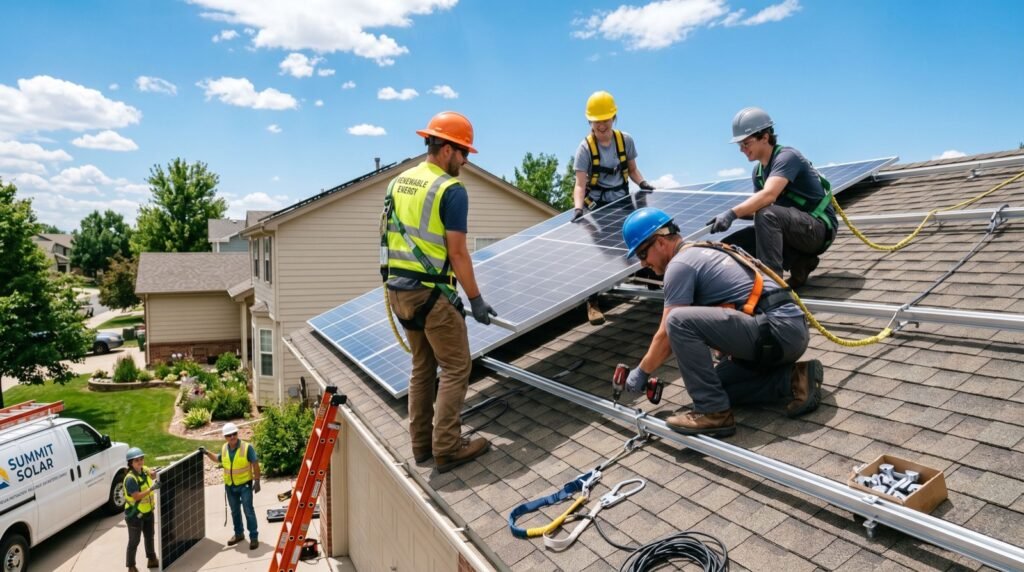
Working with a capable solar company in Kohat can transform a household budget, turning unpredictable electricity bills into a fixed, shrinking cost. In 2026, more families in the region are treating solar as a financial upgrade, not just an environmental one.
This article looks at the money side of going solar: how savings actually accumulate, what a realistic payback timeline looks like, and how the right solar company in Kohat helps you protect that return for the long haul.
The Real Economics of Going Solar
Electricity tariffs in Pakistan have climbed steadily, and each increase makes rooftop generation more valuable. Every unit you produce at home is a unit you no longer buy at rising grid rates. That gap is where your savings live.
A well-designed system typically offsets the majority of a household’s daytime consumption. Over a full year, those offsets add up to a substantial reduction on your bill, and with net metering you earn credit for surplus energy exported during peak sun.
Understanding Payback Period
Payback period is the time it takes for accumulated savings to equal your upfront investment. For most homes today that window sits between three and five years, shortening further as tariffs rise. After payback, your generation is essentially free for the remaining life of the panels.
How Does a Solar Company in Kohat Maximize Your Return?
Savings are not automatic. They depend on accurate sizing, quality components, and a design tuned to your consumption pattern. A knowledgeable solar company in Kohat studies your bills, inspects your roof, and engineers a system that captures the most value per rupee spent.
Here is where professional design pays off financially:
- Right-sizing: avoids overspending on capacity you will never use.
- Shading analysis: positions panels to dodge trees, water tanks, and neighboring walls.
- Load matching: aligns generation with the hours you consume the most.
- Component pairing: selects panels and storage that work efficiently together.
- Net metering setup: ensures every exported unit earns you credit.
The choice of inverter drives much of your long-term return, since it controls how efficiently solar energy reaches your appliances and batteries. Installing a dependable hybrid inverter in Pakistan keeps conversion losses low and gives you backup power during outages, which itself has real economic value when the grid fails.
The Hidden Cost of Load-Shedding
Outages carry a price tag most families never calculate: spoiled food, lost productivity, and the wear of frequent restarts on appliances. A hybrid solar setup neutralizes that cost by keeping essential loads running, adding savings that never appear on your electricity bill.
Comparing a Solar Investment to Grid Dependence
Staying fully on the grid feels cheaper because there is no upfront cost, but the meter keeps running and rates keep climbing. Solar reverses that curve. The table below contrasts the two paths over a decade.
| Factor | Grid Only | Solar With Battery |
|---|---|---|
| Upfront cost | None | One-time investment |
| Monthly bill trend | Rising each year | Falling toward zero |
| Outage protection | None | Backup on critical loads |
| 10-year cost | Highest and climbing | Lowest after payback |
| Property value | Unchanged | Often increased |
Global data supports the shift. The International Energy Agency projects that solar will supply a growing share of new electricity capacity worldwide, driven by falling costs and rising demand. Homeowners who act early in this trend lock in savings sooner.
Protecting Your Investment Over Time
A solar system is a long-term asset, and small habits keep its returns intact. Regular cleaning restores lost output, and periodic inspections catch failing components before they drag down performance.
Follow this schedule to safeguard your savings:
- Clean panels during dusty months to recover output.
- Review your monitoring data monthly for unexpected drops.
- Inspect battery health at least twice a year.
- Check mounting and cabling after storms or high winds.
- Keep warranty documents and service records organized.
Choosing reputable service experts for these tasks ensures problems get fixed correctly the first time. A neglected system quietly loses money through reduced generation, so ongoing care is part of the return, not an optional extra.
When to Consider Expansion
Many families start modest and expand as they add appliances or an electric vehicle. A forward-thinking installer sizes your inverter and wiring with headroom, so upgrading later means adding panels rather than replacing the whole system.
Financing and Budgeting Your Solar Project
The upfront cost is the biggest hurdle for many families, yet it is also the most manageable with a clear plan. Treat solar as an investment with a defined payback, not a discretionary expense.
Begin by matching the system size to your actual budget rather than an aspirational one. A modest system that you can afford outright often delivers a better return than a large one that stretches your finances thin. You can always expand later as savings accumulate.
Some households phase the purchase, installing panels and an inverter first and adding battery storage once the initial savings prove the concept. This staged approach spreads the cost while still cutting the daytime bill from month one. A thoughtful installer will design the first phase with expansion in mind so nothing gets wasted.
Track Your Returns From Day One
Keep a simple record of your bills before and after installation. Watching the monthly number fall is not just satisfying; it confirms your system performs as promised and flags any dip that needs attention. Concrete data, drawn from your own meter, is the most honest proof that the investment is working.
By 2026, rising tariffs mean the gap between a solar-powered home and a grid-only home widens every year. Acting sooner locks in that advantage and starts the payback clock earlier, which is why so many Kohat families are moving now rather than waiting.
Frequently Asked Questions
How much can I save by going solar in Kohat?
Savings vary with system size and consumption, but many households cut the bulk of their daytime bill and reach payback within three to five years. As tariffs keep rising, both the savings and the speed of payback improve.
Is solar worth it if I only use power at night?
Yes, with battery storage. Panels generate during the day, batteries store the surplus, and you draw on that stored energy after sunset. Net metering can also bank daytime exports as credit against nighttime grid use.
Will solar increase my property value?
A quality installation with documented warranties often makes a property more attractive to buyers, since it comes with lower running costs and outage protection. Keeping your paperwork organized helps demonstrate that value.
What happens after the panels are paid off?
Once accumulated savings cover your upfront cost, the electricity you generate is effectively free for the remaining panel life, which commonly extends well beyond two decades. Only occasional maintenance and eventual battery replacement remain.
Start Saving With the Right Partner
A trusted solar company in Kohat converts a one-time investment into years of falling bills and reliable backup power. Focus on accurate sizing, quality components, and diligent maintenance to protect your return. Compare providers, review the numbers, and take the first step toward energy independence today.